AI Films Are Changing Brand Storytelling: What Businesses Need to Know
Film production has always been about imagination.
A director imagines a world.
A cinematographer decides how that world should look.
Actors bring characters to life.
Editors turn hours of footage into a story.
Now artificial intelligence is adding an entirely new layer to the creative process.
With AI film production, brands can explore characters, environments, concepts and cinematic worlds that would previously have required significant production resources.
But the most exciting part is not the technology.
It is what the technology allows storytellers to imagine.
What Is an AI Film?
An AI film uses artificial intelligence at one or more stages of the filmmaking or content-production process.
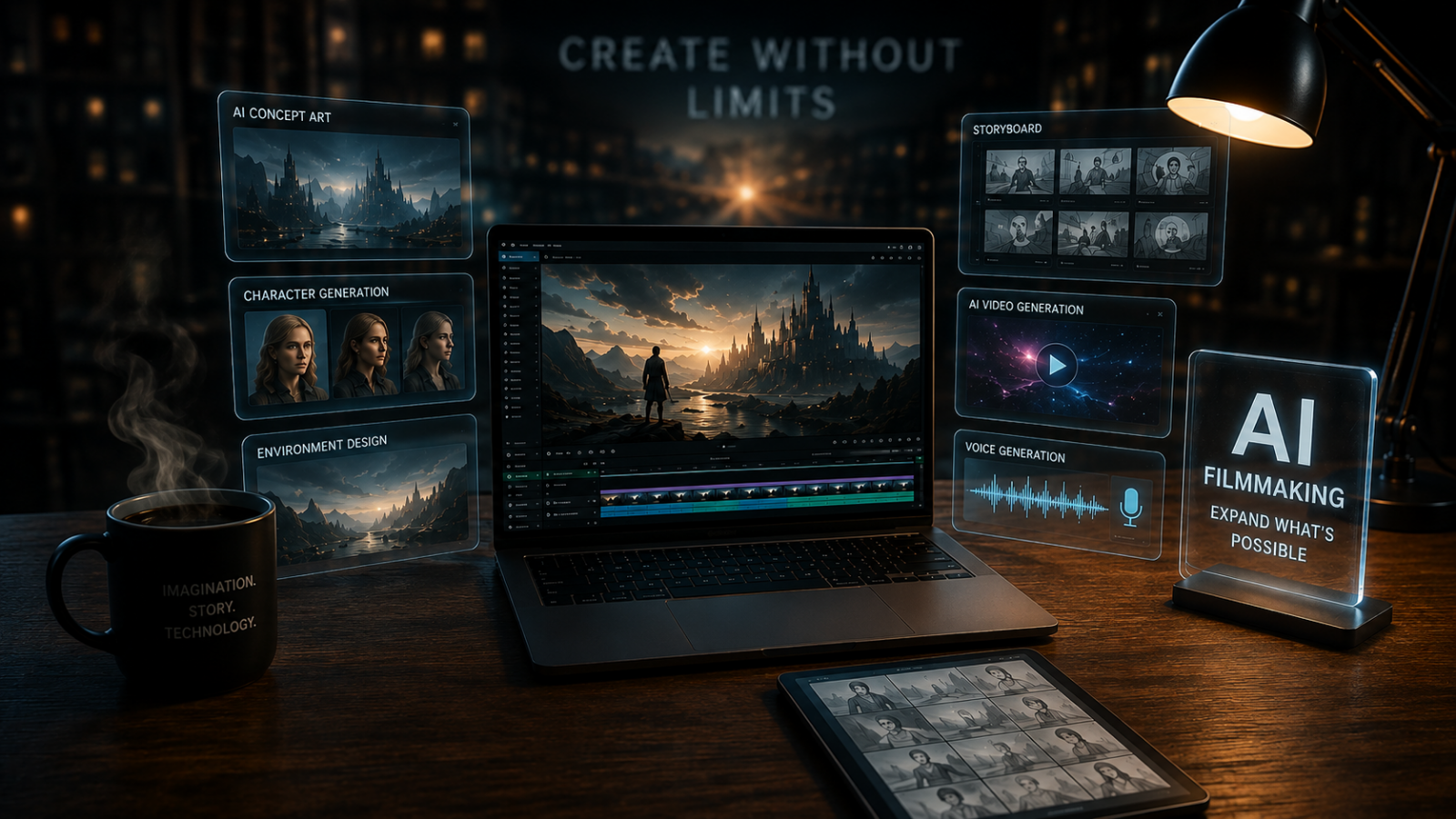
AI can assist with:
- Concept development
- Script ideation
- Storyboarding
- Character creation
- Environment generation
- Image generation
- Video generation
- Voice production
- Visual effects
- Editing assistance
- Creative variations
This does not necessarily mean that an entire film is created by AI.
In many professional productions, AI works alongside traditional filmmaking.
The result can be a hybrid production combining human direction, cinematic storytelling and AI-generated visual elements.
Why Brands Are Exploring AI Video
Traditional production can require locations, sets, large crews, specialised equipment and significant planning.
AI can provide another route for certain creative concepts.
Imagine a perfume brand wanting to show its fragrance travelling through an imaginary ocean.
Or an automotive brand wanting to visualise a vehicle moving through a futuristic city.
Or a technology company wanting to represent an abstract concept such as artificial intelligence transforming a business.
Some of these ideas can be difficult or expensive to film traditionally.
AI can help turn them into visual concepts.
AI Does Not Replace Creative Direction
This distinction is important.
AI can generate possibilities.
It does not automatically know which possibility is right for a brand.
A Strong AI Film Still Needs
- A concept
- A narrative
- A visual language
- A brand strategy
- Creative direction
- Editing
- Human judgement
Without these elements, AI-generated content can quickly become visually impressive but emotionally empty.
The technology is powerful.
The story still has to matter.
AI Films for Social Media
One of the biggest opportunities is the connection between AI films and short-form digital content.
A single cinematic AI concept can potentially become:
- Instagram Reels
- YouTube Shorts
- TikTok videos
- Digital advertisements
- Product teasers
- Campaign trailers
- Website visuals
- Social media loops
This makes AI particularly interesting for brands that need to produce a high volume of distinctive digital content.
The New Creative Advantage
For UAE brands, particularly those operating in competitive sectors such as real estate, automotive, hospitality, fashion, beauty, retail and technology, differentiation is becoming increasingly important.
Everyone can publish a photograph.
Everyone can create a promotional video.
The opportunity lies in creating something people have not seen before.
AI can help brands experiment with visual worlds that are unusual, cinematic and highly imaginative.
That can turn an ordinary campaign into a conversation.
The Best AI Content Still Feels Human
Technology may create the visual.
People create the emotion.
The strongest AI films are therefore not simply demonstrations of what AI can do. They use AI as a creative instrument to communicate an idea.
At Aion Production, our approach combines AI-powered content creation with filmmaking, visual storytelling, brand strategy and digital marketing. The objective is not to use AI because it is fashionable.
The objective is to use the right technology when it makes the story better.
Where AI Film Production Is Heading
The boundaries between advertising, filmmaking, social media and digital art are becoming increasingly fluid.
A brand film can become a social campaign.
A social campaign can become an interactive experience.
An AI concept can become a cinematic advertisement.
And a single creative idea can travel across multiple platforms.
For brands, this creates a new creative landscape.
The question is no longer simply:
“Can AI Make a Film?”
The more interesting question is:
“What Could Your Brand Tell If the Limits of Production Were No Longer the Limits of Imagination?”
That is where AI filmmaking becomes genuinely exciting.